

A single wrong number on your customs declaration can hold an entire shipment at port. For importers in Pakistan, HS codes determine duty rates, tax liability, permit requirements and examination channel assignment on every consignment. Getting the code right is not a compliance formality. It is a direct cost control decision.
This guide covers what HS codes are, how Pakistan's eight-digit PCT code system is structured, where classification errors typically occur and how to find and verify the correct code before your cargo arrives at port.
What Are HS Codes?
The Harmonized System nomenclature WCO developed and maintains is a globally standardized numerical system for classifying traded goods. Every product moving across an international border is assigned an HS code. Customs authorities in every country that has adopted the system use it to identify products, calculate applicable duties, enforce trade policy and gather trade statistics.
The first six digits of any HS code are internationally consistent. A portable laptop under heading 8471 carries the same six-digit classification whether it is shipped from China, declared at Karachi Port or cleared through a terminal in Germany. What differs between countries is how those six digits are extended at the national level to apply specific duty rates and regulatory conditions.
HS Codes vs PCT Codes in Pakistan
In Pakistani trade circles, both terms are used interchangeably. The technical distinction is simple.
HS code is the international term. Under Pakistan Customs Tariff PCT codes are the official eight-digit classification FBR uses on every Goods Declaration filed through WeBOC. The first six digits follow the WCO's international nomenclature. The final two are Pakistan's national subdivision, which assigns the specific duty rate, exemptions or restrictions that apply to that product in Pakistan.
How the 8-Digit PCT Code Is Structured
Knowing the 8-digit PCT code structure Pakistan uses helps importers spot classification errors before filing.
Digits 1 and 2 (Chapter): The broad product category. Chapter 84 covers machinery. Chapter 87 covers vehicles. There are 97 chapters in total.
Digits 3 and 4 (Heading): Narrows to a specific product type. Heading 8471 under Chapter 84 covers computers and data processing machines.
Digits 5 and 6 (Subheading): Adds further specificity. These first six digits are internationally standardized under the WCO Harmonized System.
Digits 7 and 8 (National Subdivision): Pakistan's own extension. FBR uses these to assign specific duty rates, exemptions or restrictions that apply only in Pakistan's tariff and may differ completely from another country's national subdivision for the same product.
What HS Codes Control at Pakistan Customs
The HS code for import in Pakistan is not just an administrative field on a form. It is the single variable that determines the total cost and compliance requirements of every import consignment.
Customs Duty and Tax Liability
The customs duty HS code Pakistan importers declare on their GD directly sets the applicable rate from the Pakistan Customs Tariff. Beyond base duty, the code triggers additional customs duty, regulatory duty under the Import Policy Order, sales tax at import and withholding income tax. A single code change can shift the combined liability significantly.
Beyond base duty, the code triggers additional customs duty, regulatory duty under the Import Policy Order, sales tax at import and withholding income tax. A single code change can shift the combined liability significantly.
Import Permits and Regulatory Conditions
Certain codes carry non-tariff requirements: import permits, NOCs from bodies like DRAP or PSQCA, pre-shipment inspection conditions or restrictions under the current Import Policy Order. When a product arrives under a code that triggers a permit requirement that was not obtained, customs cannot release the consignment regardless of whether duties are paid.
WeBOC Examination Channel
Pakistan's WeBOC goods declaration classification system assigns every GD to a Green, Yellow or Red examination channel, partly based on the commodity's PCT code and its associated risk profile. The declared code therefore influences not just the duty cost but the clearance timeline of every shipment.
Common Classification Mistakes and Their Real Cost
Most HS code classification errors Pakistan importers face are not intentional. They stem from relying on wrong sources, misreading the tariff structure or failing to check Pakistan's national subdivisions against supplier codes.
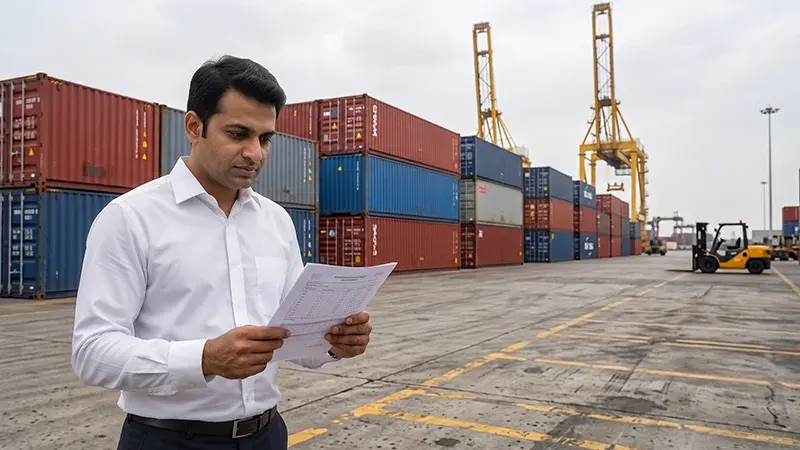
Copying the supplier's code without checking it against FBR's tariff. A Chinese or UAE supplier classifies under their own country's tariff schedule. Their code may share six digits with the correct Pakistani PCT code but differ in the national subdivision and those final two digits can carry a very different duty rate.
Classifying by material instead of function. The Harmonized System classifies many products by primary function or intended use. A product that appears to belong in the chapter covering its raw material may actually fall under a different chapter entirely based on how it is used.
Using an outdated code. FBR revises the tariff annually. A code valid last fiscal year may be discontinued, renumbered or reassigned. Importers who use the same code year after year without checking the current tariff risk declaring a code that no longer exists or now carries a different rate.
Declaring a single code for a mixed consignment. Each product category in a shipment needs its own code. Bundling everything under the code with the lowest duty rate constitutes misdeclaration under the Customs Act, 1969.
Once FBR identifies an error, the consequences stack. The GD gets reassessed under the correct code and the importer pays the duty difference. Sales tax and withholding tax are recalculated on the revised dutiable value. The container stays at the terminal or CFS while the dispute is resolved, accumulating demurrage and storage charges throughout.
Misclassification penalties FBR imposes under the Customs Act, 1969 fall on the importer of record. Liability cannot be shifted to the supplier, the clearing agent or the overseas freight partner regardless of who provided the incorrect code.
How to Find the Correct HS Code for Your Import
Classification should be confirmed before cargo is ordered, not after shipment booking. Verifying at the sourcing stage is the most effective way to control classification risk.
Start With the FBR Pakistan Customs Tariff
The authoritative source is the tariff document published annually by FBR at fbr.gov.pk. It allows search by product description or by code and specifies the applicable duty rate and any conditions for each PCT code.
Use Pakistan Single Window
The Tradeverse portal on Pakistan Single Window gives access to commodity codes, tariff rates and the specific documents required for each code, including non-tariff regulatory conditions that apply before a shipment can be cleared.
Provide a Complete Technical Description
Vague product descriptions like "machine parts" or "electronic items" make confident classification impossible. Include the product's composition, function, intended use and technical specifications. The more precise the description, the more defensible the selected code.
Work With a Licensed CHB
For products sitting between two possible classifications, a licensed Custom House Broker experienced with HS codes Pakistan customs process requires is the most reliable resource. The CHB's classification decision, supported by full product documentation, provides a defensible position if customs queries the declared code.
When FBR Updates the Tariff
FBR revises the Pakistan Customs Tariff each fiscal year. Changes are announced with the Federal Budget in June and take effect from July. New codes are introduced, existing ones are renumbered or discontinued and duty rates on specific products may change.
Importers bringing in the same product regularly should verify the applicable code at the start of each fiscal year. A code that was correct for a March shipment may not be the correct code for an August shipment if a tariff revision took effect in July.
Conclusion
The PCT code controls duty rates, tax liability, permit requirements and examination channels for every import into Pakistan. Errors at the classification stage do not stay at the classification stage. They compound through duty reassessment, demurrage, storage and potential penalties before the cargo moves.
For importers needing HS code verification and customs clearance at Karachi Port and Port Qasim, Dynamic World Wide Logistics Group (DWWLG) provides customs brokerage services including classification support, GD filing and full port coordination.
Frequently Asked Questions
1. What is the difference between an HS code and a PCT code in Pakistan?
HS code is the WCO's international term, while PCT code is FBR's official eight-digit designation used on every Pakistan import declaration. Both refer to the same number.
2. How many digits does a Pakistani HS code have?
Pakistan uses an eight-digit PCT code where six digits are internationally standardized and two are Pakistan-specific national subdivisions that may carry a different duty rate from other countries.
3. Who is responsible for HS code accuracy on a Pakistan import declaration?
The importer of record bears full legal responsibility for the declared classification under the Customs Act, 1969.
4. What happens if Pakistan Customs disagrees with my declared HS code?
The GD is held for reassessment and the importer must pay the duty difference plus applicable penalties and accumulated demurrage before the cargo is released.
5. How often does FBR update the Pakistan Customs Tariff?
FBR revises the tariff annually, with changes typically taking effect from July following the Federal Budget announcement in June.
6. Can I use my supplier's HS code on a Pakistan import declaration?
Not without verifying it against FBR's current tariff, because the final two digits may differ and carry a completely different duty rate in Pakistan.