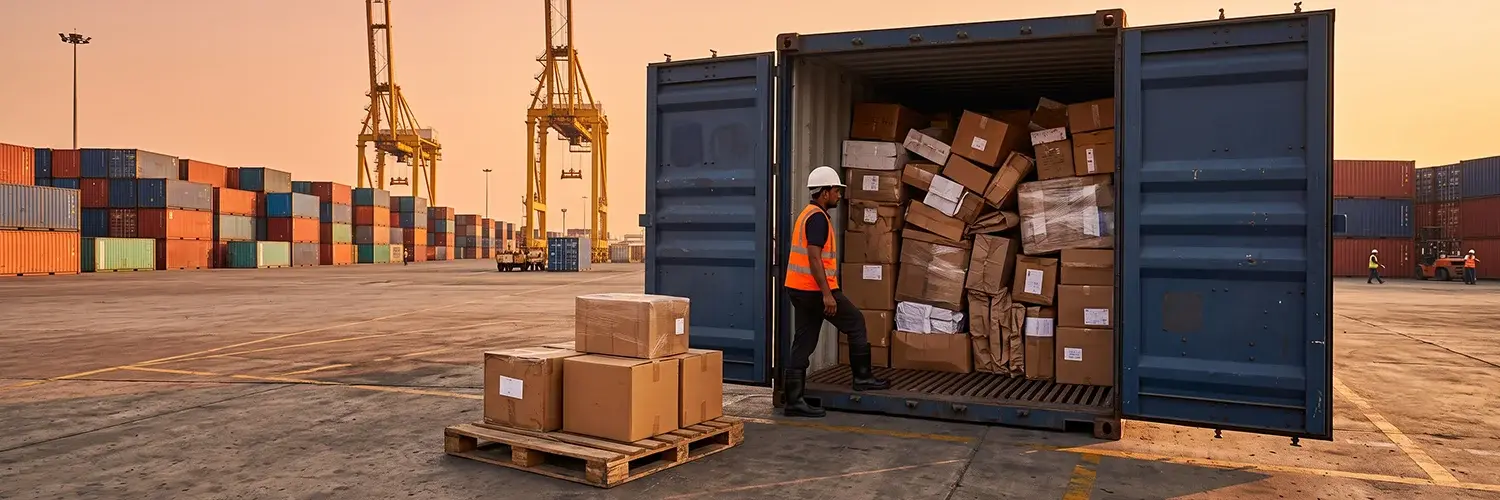
Container destuffing is a critical stage of Pakistan's import process in which cargo is unloaded, verified, and prepared for delivery. For importers handling LCL, FCL, or bonded shipments, understanding the container destuffing process in Pakistan can help reduce delays, storage charges and customs complications.
What Is Container Destuffing?
Container destuffing is the process of unloading cargo from a shipping container after it arrives at its destination port. Also known as cargo stripping in logistics, it marks the point where containerized freight is separated, inspected where required, and prepared for final delivery.
Unlike standard unloading, container destuffing in Pakistan is a customs-regulated activity. Cargo can only be removed from a container after the required customs procedures have been completed and the appropriate approvals have been granted.
Depending on the shipment type and customs requirements, it may take place at:
- A Container Freight Station (CFS)
- A port terminal
- An approved bonded warehouse
- The importer's bonded premises
Why It Matters at Pakistani Ports
Container destuffing directly affects cargo release, storage costs, and delivery timelines.
At Karachi Port and Port Qasim, shipping lines allow only a limited free period after a container is discharged. If cargo is not processed within that time, importers may face demurrage and storage charges.
For LCL cargo destuffing in Pakistan, multiple importers share one container. No consignee can collect their goods until the consolidated shipment has been completely destuffed and each consignment has been identified.
A smooth unloading process helps:
- Reduce port delays
- Avoid unnecessary storage charges
- Speed up customs clearance
- Improve supply chain efficiency
- Ensure timely cargo delivery
Where Does It Take Place?
The location depends on the cargo type, customs requirements, and delivery method.
Container Freight Station (CFS)
Most LCL cargo destuffing in Pakistan takes place at a Container Freight Station (CFS).
A CFS is a customs-bonded facility where consolidated containers are opened, individual consignments are separated, and cargo is stored until customs clearance and release.
Several licensed CFS bonded warehouses in Karachi support import operations for Karachi Port.
Port Terminal
Some FCL destuffing in Pakistan takes place inside the terminal when customs assign a shipment to the Red Channel for physical examination.
In these cases, customs supervise the unloading before the container can leave the port.
Terminal operators coordinate container positioning, handling equipment, and unloading activities while customs oversee the examination.
Importer's Bonded Premises
Certain importers with bonded facilities may receive approval to transport sealed containers directly to their premises.
This arrangement is generally used for bonded cargo destuffing in Pakistan and requires prior customs authorization before the container leaves the port.
Loose Delivery
In some cases, customs may approve loose delivery at Pakistani ports, allowing cargo to be released individually instead of moving the entire sealed container.
Loose delivery is commonly used when customs examination or operational requirements make direct container movement impractical.
Step-by-Step Destuffing Process
Although every shipment is different, the overall container unloading process at Pakistan ports follows a structured workflow.
Step 1: Vessel Arrival and IGM Registration
Once a vessel arrives at Karachi Port or Port Qasim, the shipping agent files the Import General Manifest (IGM) in WeBOC.
The IGM records every container and its contents. Customs processing cannot begin until the manifest is successfully registered.
Step 2: Goods Declaration (GD) Filing
The importer or their licensed Custom House Broker (CHB) submits the Goods Declaration (GD) through WeBOC.
The GD includes:
- Cargo description
- HS Code
- Quantity
- Commercial value
- Supporting import documents
The declaration must match the IGM and shipping documents to avoid customs queries.
Step 3: WeBOC Examination Channel Assignment
After the GD is filed, WeBOC assigns the shipment to an examination channel.
- Green Channel — No physical examination. Cargo proceeds after duty payment.
- Yellow Channel — Document verification only. Physical inspection is generally not required.
- Red Channel — Physical customs examination. Container is opened for inspection before release.
The WeBOC examination channel determines whether full or partial destuffing is required.
Step 4: Customs Duty Payment
Once customs assessment is complete, the importer pays all applicable taxes and duties.
These may include:
- Customs Duty
- Sales Tax
- Regulatory Duty (where applicable)
- Withholding Tax
Cargo cannot proceed until payment is reflected in WeBOC.
Step 5: Delivery Order and Approval
Once customs formalities are complete, the cargo follows different paths depending on shipment type.
- FCL shipments are generally released as sealed containers unless customs order an examination.
- LCL shipments are transferred to a Container Freight Station for destuffing.
- Red Channel shipments undergo customs-supervised unloading before release.
For LCL cargo, importers also require a valid Delivery Order (DO) issued by the freight forwarder before cargo can be collected.
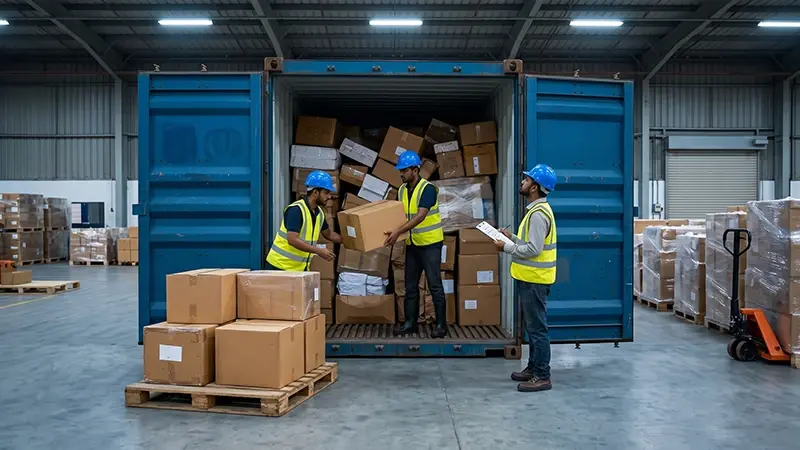
Step 6: Seal Verification and Cargo Destuffing
Before unloading begins, customs or authorized port staff verify the container seal against the shipping documents to ensure cargo integrity.
Once verified, trained handling teams begin the cargo stripping logistics process.
Depending on the shipment, unloading may involve:
- Forklifts
- Pallet jacks
- Manual handling
- Specialized lifting equipment
Cargo is removed systematically to minimize handling damage.
Step 7: Cargo Verification
After destuffing, customs and handling staff verify the cargo against the:
- Packing List
- Goods Declaration
- Commercial Invoice
If discrepancies are found in quantity, description, or valuation, customs may suspend the release until the issue is resolved.
If any cargo damage is identified during unloading, it is documented immediately for customs records and potential insurance claims.
Step 8: Cargo Release
Once customs requirements have been completed, the cargo is released to the importer or their authorized representative.
For LCL shipments, release only takes place after:
- Destuffing is complete
- Documentation is verified
- The Delivery Order (DO) has been submitted
LCL vs FCL Shipments
Although both shipment types follow similar customs procedures, the unloading process is different.
LCL (Less than Container Load)
LCL cargo combines shipments from multiple importers into one container.
Before any consignee receives their cargo:
- The container is moved to a CFS.
- The shipment is fully destuffed.
- Individual consignments are separated.
- Customs complete the required verification.
As a result, one delayed consignment can affect every importer sharing the container.
FCL (Full Container Load)
An FCL shipment belongs to a single importer.
After customs clearance and duty payment, the sealed container is usually released directly to the importer.
Actual unloading normally takes place at the importer's warehouse rather than inside the port, unless customs require a Red Channel examination.
Customs Examination During Unloading
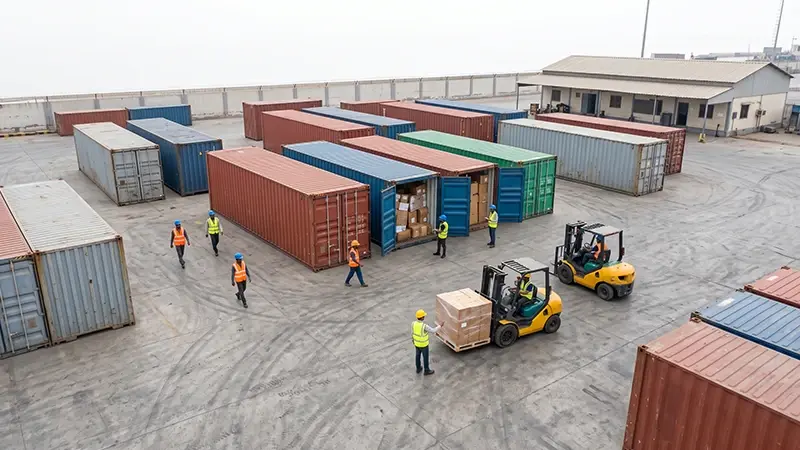
Not every shipment undergoes a physical inspection. However, when WeBOC assigns a Goods Declaration (GD) to the Red Channel, customs require the container to be opened for examination before release.
The inspection may be partial or complete, depending on the commodity, risk profile, or customs assessment.
What Do Customs Verify?
During examination, customs officials check whether the cargo matches the declared information, including:
- Product description
- HS Code
- Quantity
- Declared value
- Packing details
If discrepancies are found, customs may raise a query, suspend the release process, or reassess duties before the shipment can proceed.
Because this inspection involves opening the container under customs supervision, it forms an essential part of the customs-regulated unloading process in Pakistan.
Common Delays in the Process
Even after customs clearance, several operational issues can delay cargo release.
CFS Congestion
During peak import seasons, Container Freight Stations (CFS) may experience heavy workloads, delaying container unloading and cargo separation.
Customs Examination
Shipments assigned to the Red Channel generally take longer because customs must complete a physical inspection before approving release.
Documentation Errors
Incorrect or incomplete paperwork often causes avoidable delays.
Common issues include:
- Goods Declaration mismatches
- Missing supporting documents
- Incorrect packing list details
- Invalid or delayed Delivery Orders (DO)
Cargo Discrepancies or Damage
If customs discover differences between the declared and actual cargo, additional verification is required.
Similarly, cargo damaged during transit is documented before release so the importer can pursue insurance or carrier claims where necessary.
Delays in Bonded Cargo Approval
For bonded cargo destuffing in Pakistan, importers must obtain customs approval before moving a sealed container to their own premises.
Any delay in this approval may result in additional storage and demurrage charges.
How to Prepare for Smooth Cargo Release
Good preparation before the vessel arrives can significantly reduce delays and unnecessary costs.
Ensure Documentation Is Accurate
Verify that your Commercial Invoice, Packing List, Bill of Lading, and Goods Declaration (GD) all match exactly before filing.
Arrange the Delivery Order Early
For LCL cargo, obtain the Delivery Order (DO) from your freight forwarder as soon as possible to avoid unnecessary waiting at the CFS.
Track Your Container
Monitor your shipment's arrival, terminal allocation, and Container Freight Station assignment so collection can be planned in advance.
Prepare for Customs Examination
If your cargo is likely to enter the Red Channel, coordinate with your Custom House Broker (CHB) to ensure customs formalities are completed without delay.
Plan Bonded Movements in Advance
If you intend to destuff cargo at your own bonded premises, obtain customs approval before the container arrives at the port.
Work With an Experienced Logistics Partner
An experienced freight forwarder can coordinate customs clearance, CFS operations, documentation, and cargo handling, reducing the risk of delays throughout the container destuffing process in Pakistan.
Conclusion
Container destuffing connects customs clearance, port handling, cargo verification, and final delivery. Understanding the process helps importers reduce delays, control costs, and manage LCL, FCL, or bonded shipments more efficiently.
Dynamic World Wide Logistics Group supports businesses with customs brokerage, CFS coordination, port handling, and cargo delivery, providing practical assistance throughout the container destuffing process at Karachi Port and Port Qasim.
Frequently Asked Questions
1. What is container destuffing?
It is the customs-regulated unloading of cargo from a shipping container after arrival at a Pakistani port.
2. Where does container destuffing take place in Pakistan?
It usually takes place at a CFS, port terminal, bonded warehouse, or approved importer premises.
3. What is a Delivery Order?
A Delivery Order authorizes the terminal or CFS to release cargo to the importer or their representative.
4. How does container destuffing differ for LCL and FCL?
LCL cargo is separated at a CFS, while FCL cargo is generally delivered in the sealed container after clearance.
5. Can customs inspect cargo during destuffing?
Yes, Red Channel shipments may undergo partial or complete customs-supervised examination during destuffing.
6. What causes container destuffing delays?
Common causes include congestion, document errors, customs examination, cargo discrepancies, and delayed bonded movement approval.