
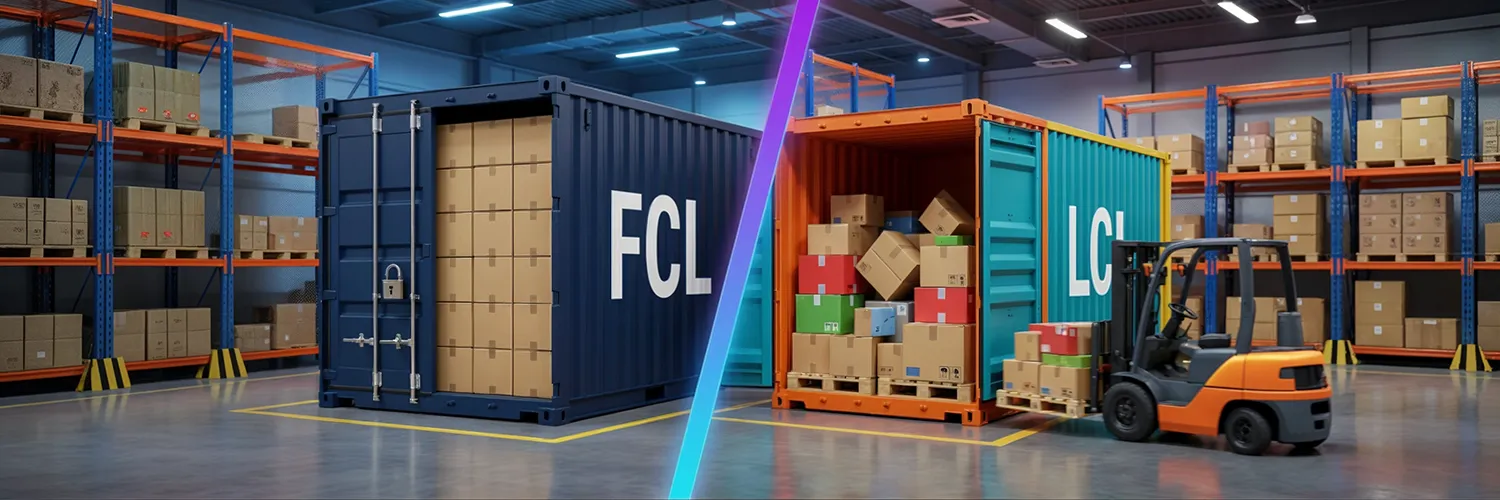
LCL vs FCL shipping is a critical decision that directly impacts cost, speed, and efficiency in global trade. Businesses moving goods internationally must understand how each model works to avoid unnecessary expenses and delays.
This guide explains the difference between LCL and FCL shipping, their costs, benefits, and when to use each, helping you make smarter logistics decisions.
- What Is LCL and FCL Shipping?
- LCL vs FCL: Core Differences
- Comparison: Where Does the Shift Happen?
- Transit Time and Operational Efficiency
- Cargo Safety and Risk Factors
- When Should You Choose LCL Shipping?
- When Should You Choose FCL Shipping?
- LCL Shipping from Pakistan: Key Trade Routes
- How to Decide: LCL or FCL?
- Container Types and Shipping Considerations
- The Role of Freight Forwarding in Optimizing Shipments
- Conclusion
What Is LCL and FCL Shipping?
LCL (Less than Container Load) shipping is used when your cargo does not fill an entire container. Your goods are consolidated with shipments from other businesses, and you pay based on the space you occupy, usually calculated per cubic meter (CBM). This is where ocean consolidation becomes a practical solution, enabling smaller businesses to access global shipping without needing high volumes.
FCL (Full Container Load) shipping, on the other hand, means you book an entire container exclusively for your cargo. Even if the container is not fully utilized, you still pay a fixed rate. The FCL shipping meaning is simple, full control over a dedicated container with no shared space.
LCL vs FCL Shipping: Core Differences
| Factor | LCL Shipping | FCL Shipping |
|---|---|---|
| Cost | Pay per CBM | Pay for full container |
| Best For | Small shipments | Large volume shipments |
| Transit | Slower (consolidation delays) | Faster (direct movement) |
| Cargo Safety | Higher handling risk | More Secure |
| Flexibility | High | Moderate |
| Cost Efficiency | Better for low volume | Better for high volume |
Comparison: Where Does the Shift Happen?
One of the most common assumptions is that LCL is always cheaper. In reality, cost efficiency depends on shipment volume.
For smaller shipments, LCL remains cost-effective since you only pay for the space used. However, as volume increases, the cumulative freight rate per CBM begins to approach the cost of a full container. Typically, once shipments reach around 15–18 CBM, FCL becomes more economical.
Businesses that actively evaluate this threshold using an LCL shipping cost calculator often reduce overall logistics expenses by switching at the right time.
Transit Time and Operational Efficiency
Transit time is where the gap between LCL and FCL becomes more visible.
LCL Transit Considerations
LCL shipments involve consolidation at origin and deconsolidation at destination, which introduces delays. Scheduling also depends on weekly sailings LCL schedules, making timelines less predictable.
FCL Transit Advantages
FCL shipments move more directly. The FCL shipment process is streamlined, with fewer touchpoints and minimal handling. This results in faster transit and better reliability, especially for time-sensitive cargo.
Cargo Safety and Risk Factors

Cargo handling plays a major role in shipment safety.
LCL Handling Risks
LCL shipments pass through multiple handling stages, loading, unloading, sorting, increasing the likelihood of damage or misplacement. While efficient for smaller loads, this model carries higher cargo damage risks in shipping.
FCL Security Advantages
FCL significantly reduces this risk. Since the container is sealed at origin and opened at destination, there is minimal interference. This is why businesses dealing with fragile or high-value goods often prioritize FCL for its security advantages.
When Should You Choose LCL Shipping?
LCL works best when flexibility is more important than speed or volume. It allows businesses to ship smaller quantities without waiting to accumulate enough cargo for a full container.
It is particularly effective for SMEs, e-commerce businesses, or companies entering new markets where demand is uncertain. The ability to ship frequently in smaller batches supports a lean inventory model and reduces storage costs.
The key LCL shipping benefits include lower upfront cost, flexibility in shipment size, and access to global routes without committing to large volumes.
When Should You Choose FCL Shipping?
FCL becomes the preferred choice when shipment volume increases or operational efficiency becomes a priority.
Businesses with consistent demand patterns, large-scale exports, or time-sensitive deliveries benefit from FCL's faster transit and reduced handling. It also simplifies processes like customs clearance, as the shipment belongs to a single consignee.
Additionally, FCL allows better control over container space utilization, especially when selecting between 20ft vs 40ft container sizes based on cargo type and weight distribution.
LCL Shipping from Pakistan: Key Trade Routes and Considerations
For businesses operating in Pakistan, LCL shipping is particularly relevant given the trade volume moving through Karachi Port. The country's primary gateway for imports and exports.
Pakistan's key LCL export routes include China (Qingdao, Shanghai, Ningbo), the UAE (Jebel Ali), and the UK (Felixstowe). Consolidated shipments on these lanes allow exporters to move goods competitively without waiting to fill an entire container.
On the import side, LCL consolidation from China remains the most active lane for SMEs sourcing goods in smaller quantities making it a practical option for businesses with lean inventory models.
However, businesses must account for Pakistan Customs clearance timelines, which can add 3 to 7 working days to the overall transit window depending on the port of entry and the nature of goods.
How to Decide: LCL or FCL for Your Shipment
At a strategic level, the choice between LCL and FCL is less about definitions and more about decision clarity.
Three variables consistently determine the right shipping model:
- Volume efficiency: If your cargo approaches container capacity, FCL reduces cost per unit and improves space utilization.
- Time sensitivity: Shipments with strict delivery timelines benefit from FCL's direct routing and minimal delays.
- Risk tolerance: High-value or fragile cargo favors FCL due to reduced handling and better security control.
Rather than defaulting to one option, high-performing supply chains evaluate these variables shipment by shipment. This approach ensures cost efficiency without compromising speed or reliability.
Container Types and Shipping Considerations
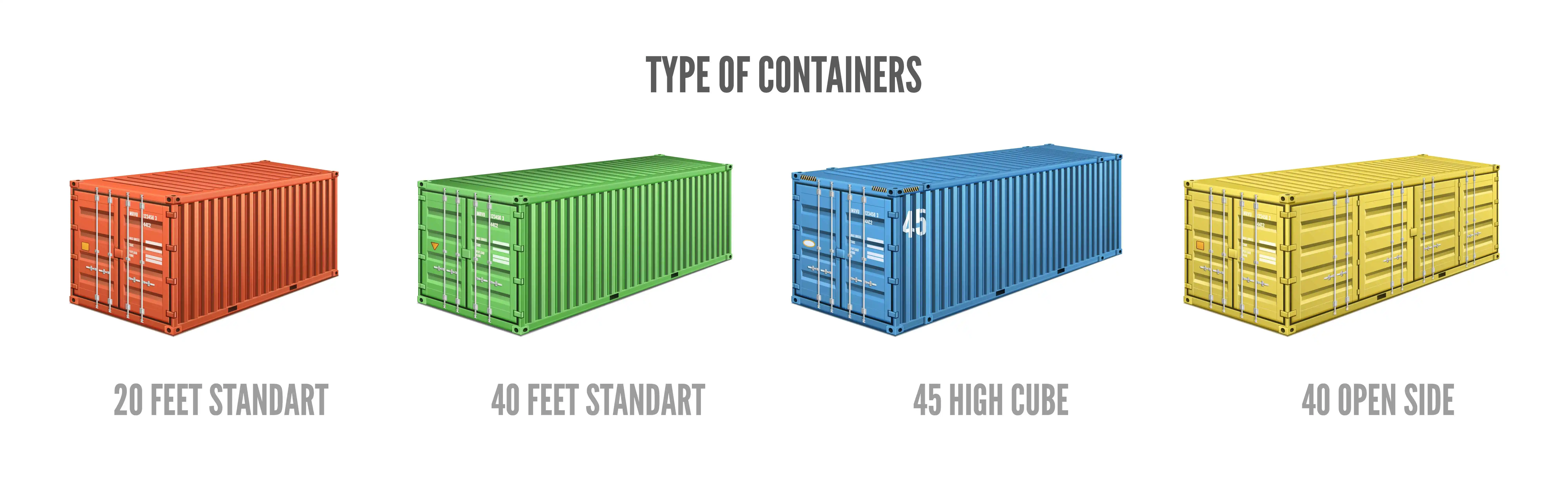
The choice between LCL and FCL is also influenced by container selection and cargo type.
Standard containers include 20ft and 40ft options, each suited for different volume and weight requirements. Specialized ocean freight container types such as refrigerated (reefer), open-top, and flat-rack containers further expand shipping capabilities depending on the nature of goods.
Beyond container selection, factors like customs clearance (FCL vs LCL), local charges in ocean freight, and door-to-door coordination all impact the overall shipping experience.
The Role of Freight Forwarding in Optimizing Shipments
Shipping decisions do not operate in isolation. Efficient execution depends on coordination across multiple touchpoints in the supply chain.
Professional freight forwarding services manage routing, documentation, consolidation, and delivery, ensuring shipments move without disruption. They also provide visibility through dynamic shipping tracking and help navigate Incoterms, compliance, and international trade requirements.
As one of Pakistan's leading ocean consolidators, Dynamic World Wide Logistics Group (DWWLG) manages LCL and FCL shipments across major global trade corridors from Karachi.
With over three decades of operational experience, six offices across Pakistan, and a 130,000 sq ft warehouse facility, DWWLG provides end-to-end freight management from consolidation and custom house brokerage to last-mile delivery.
Whether your shipment requires LCL flexibility or FCL efficiency, this depth of infrastructure ensures execution is handled with consistency and accountability at every stage.
Conclusion
The choice between LCL vs FCL shipping depends on how effectively your logistics strategy aligns with shipment volume, urgency, and risk. LCL provides flexibility and cost control for smaller loads, while FCL delivers speed, security, and efficiency at scale. Many businesses adopt a hybrid approach, using both based on operational needs.
Execution is what ultimately drives results. Partnering with experienced freight forwarders in Pakistan ensures each shipment is optimized for cost, timing, and reliability. Dynamic Worldwide Logistics Group (DWWLG) supports this by delivering tailored ocean freight solutions that adapt to your business requirements and growth.
FAQs
1. What is the main difference between LCL and FCL shipping?
LCL shares container space with other shipments, while FCL uses an entire container exclusively for one shipment.
2. Which is more cost-effective, LCL or FCL?
LCL is cheaper for smaller shipments, but FCL becomes more economical once volume exceeds around 15–18 CBM.
3. Is FCL faster than LCL shipping?
Yes, FCL is faster because it avoids consolidation and deconsolidation delays.
4. Is LCL suitable for small businesses?
Yes, LCL is ideal for SMEs and e-commerce businesses shipping smaller volumes with flexible schedules.
5. Can businesses use both LCL and FCL?
Yes, many businesses combine both depending on shipment size, urgency, and cost efficiency.